


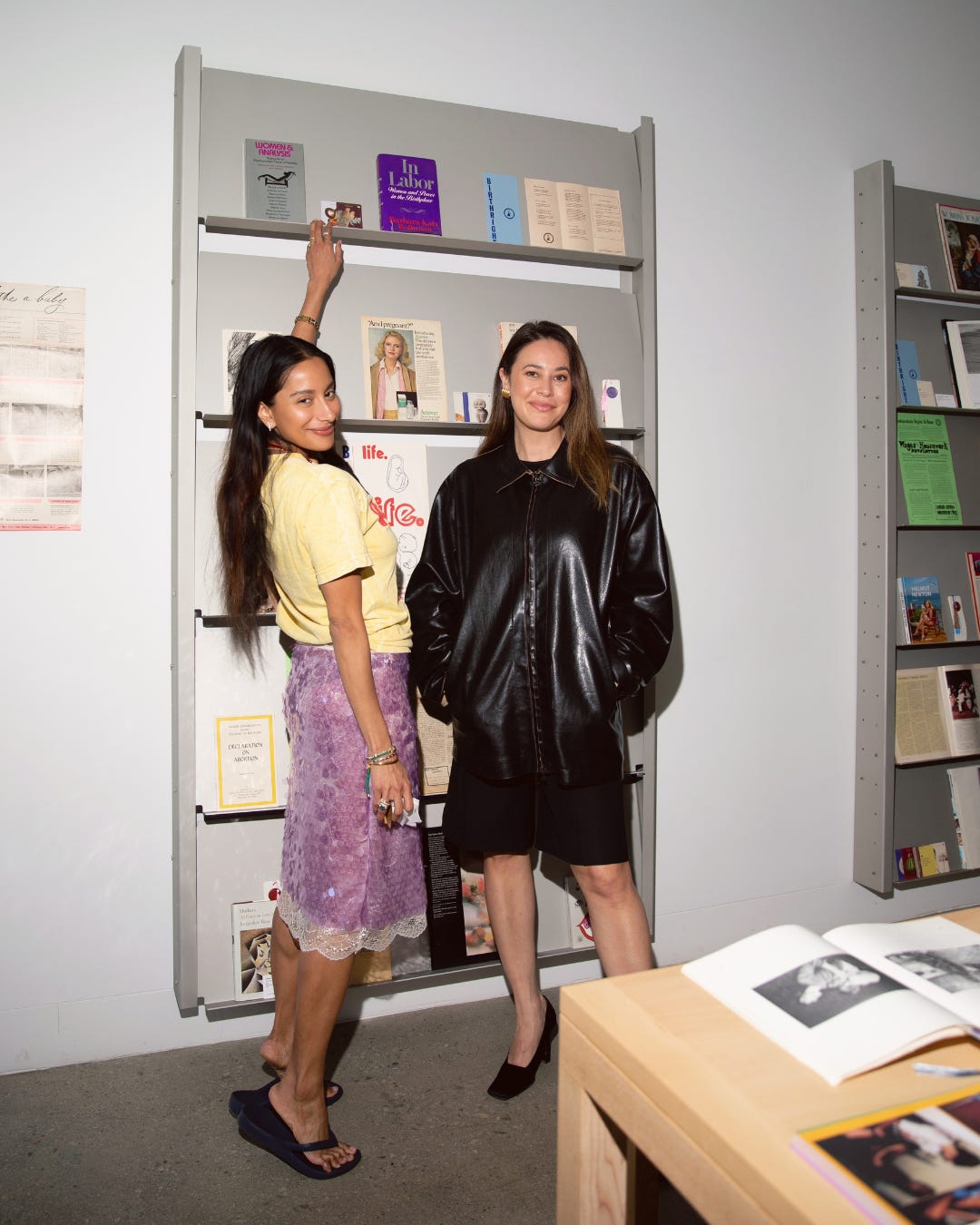
(New Yorkers, from May 28th to 31st, we’ll be at the Standard Hotel East Village exhibiting our TSS: Motherhood Archive. Open to the public: Thursday 12pm-7pm, Friday-Sunday 10am-7pm. Come see us.)
The Sticky Stuff: Motherhood Archive began with personal references and inspirations we used while building Spread the Jelly. Vintage magazines, old New Yorker covers, photography books, advertising campaigns, ephemera, literature, music, toys, clothing—all of these pieces shaped how we thought about motherhood culturally and visually. Screenshots and eBay links we sent to one another when dreaming of what STJ could be.
We were inspired by Ms. magazine (and its legendary editor, Gloria Steinem whom we published a lovely article by Megan O'Sullivan about this week); works like Our Bodies, Ourselves and The Family of Women; artists like Judy Chicago and Louise Bourgeoise; writers like Susan Sontag; and so many contemporary women whose work continues to shape these conversations today.
We’ve always referenced these materials internally—for shoots, mood boards, visual storytelling, editorial direction—because understanding where we’ve been helps us imagine where motherhood can go. What it can be.
It’s striking how rarely motherhood is archived, studied, or exhibited with an appropriate level of care. There are museums and exhibitions for nearly every subject imaginable, yet motherhood—despite quite literally shaping all of us—remains canonically and institutionally underrepresented.


The Sticky Stuff: Motherhood Archive spans so many touch points of culture: literature, music, toys, fashion, photography—as well as objects like old maternity garments, hospital bills, Barbies, Troll dolls, and other personal artifacts. As women born in the eighties, now mothers ourselves, it’s been fascinating to look back at the versions of motherhood we inherited and examine how they continue to evolve.
Everything has been patently DIY. We’ve sourced pieces from antique markets, swap meets, eBay, Poshmark, Facebook Marketplace—and physically transported most of it ourselves in our suitcases. Many broken nails. Truly glamorous work.
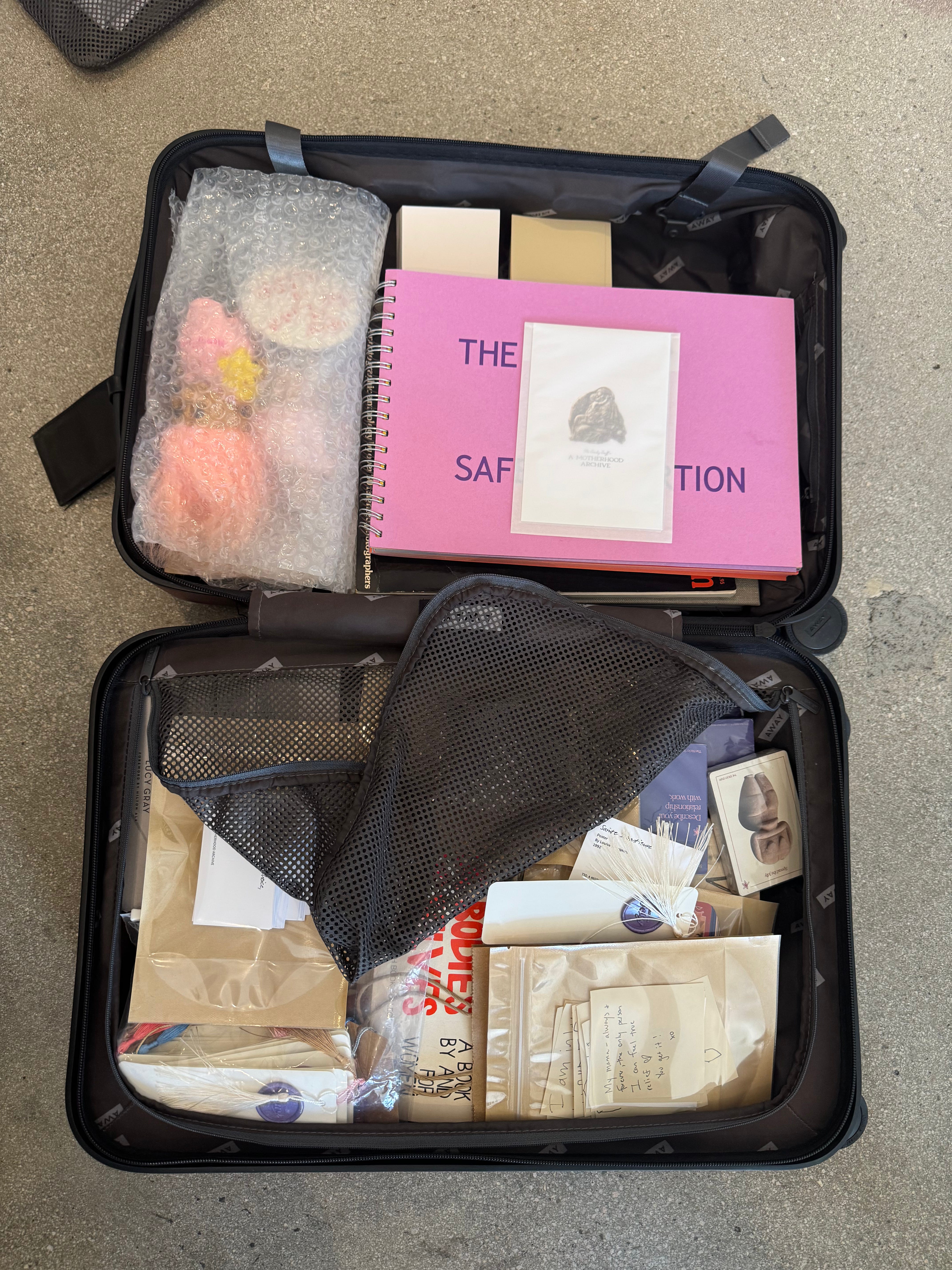
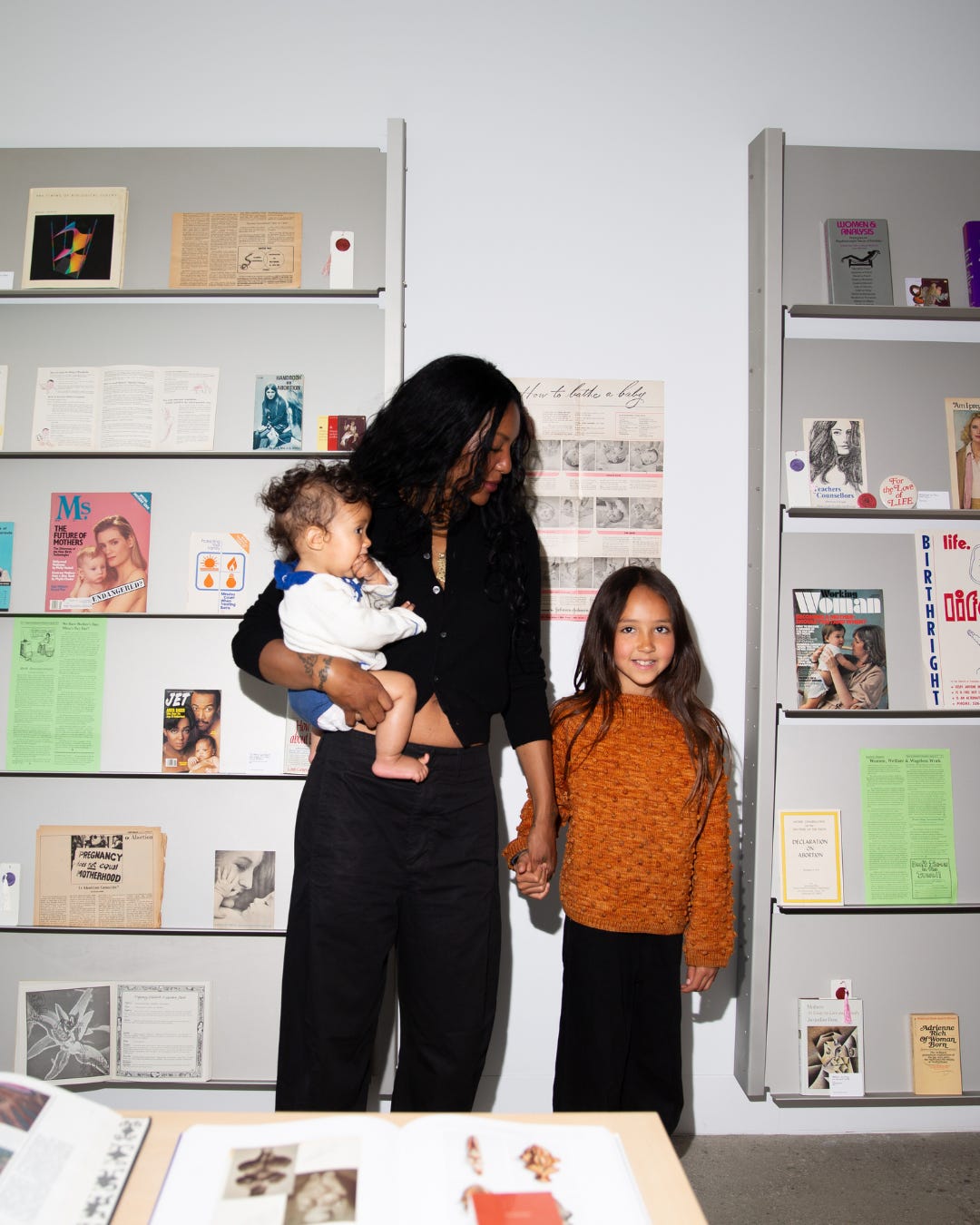
Notes from STJ Founders:
Amrit: Curating this motherhood archive has truly been one of those “I can’t believe I get to do this” experiences of my life. Perhaps it’s corny, but this is genuinely one of the most joyful and fulfilling things I’ve ever been part of.
When I was 16 and living in Australia, I’d wake up at dawn to wander car boot sales and swap meets with a flashlight, completely drawn to the stories behind every object and the people who once owned them. I’d spend hours learning about their past lives. Estate sales, auctions, Facebook Marketplace, eBay I’ve always loved the hunt.
People have called me a lifelong hoarder, but I prefer “collector.” And if you’re my husband reading this: this exhibit is proof that all of it was justified, so I never want to hear another word about it again.
Lauren: What we’ve created is so much more than an archive. At a time when everything feels increasingly automated and artificial, this is an invitation to engage with something real—to feel, connect, and honor the stories of motherhood that came before us.
And this isn’t just for mothers. Everyone is invited. Because like we always say, everybody is a mother.
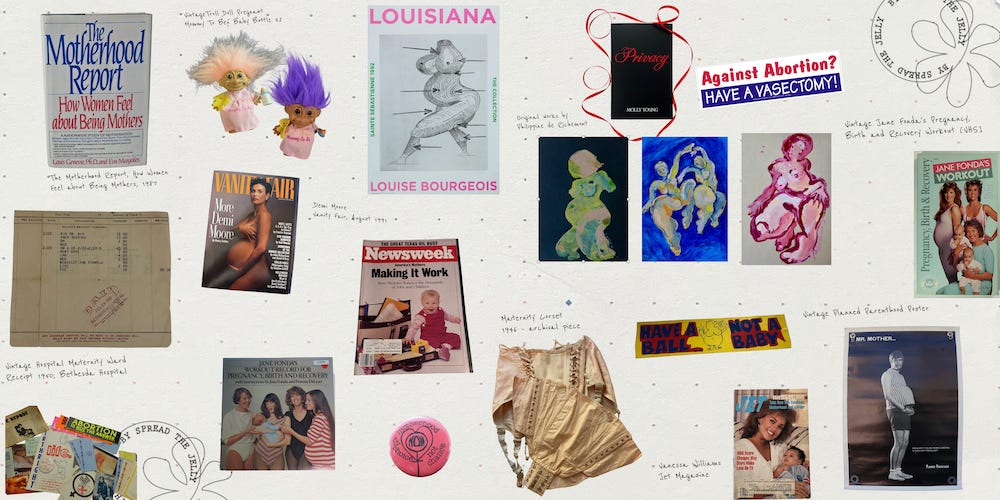
Amrit: The objects capture the evolution of conversations around motherhood, feminism, and even women’s healthcare. Among my favorites are the vintage issues of Ms. Magazine—I’m a huge Gloria Steinem fan, and I’m especially excited about her new book coming out later this year. I also love the original Louise Bourgeoise exhibition poster sourced from Paris because it’s such a special, authentic artifact connected to the exhibit.
Lauren: I’m really drawn to the collection of Troll dolls because they feel so nostalgic. Thinking about little girls playing with those toys and how ideas around girlhood and femininity have evolved over time is really interesting to me.
Another favorite is all of the Jane Fonda material we’ve collected, including her postpartum workout videos and her records. Beyond fun and fascinating. I also love the postpartum corset with the instructional insert. Seeing something that was essentially marketed as a medical device for women immediately after giving birth was striking to me because it reflects how long women have been expected to “bounce back” physically after pregnancy. Growing up in the era of bounce-back culture, it was fascinating to see an even earlier version of those same pressures.


Amrit: I also love the vintage activist pins in the collection, especially pieces like the “Motherhood by Choice, Not Chance” pin. We also have an incredible Planned Parenthood poster coming in called Mr. Mother from the seventies, featuring a pregnant man, which feels surprisingly contemporary even now. Looking at these materials reminds me how relevant many of these conversations still are today. At the same time, I feel a deep admiration for the organizations and individuals who were having these conversations decades ago, often while facing enormous resistance and anti-abortion propaganda.
Lauren: It’s easy now to openly advocate for maternal support and women’s healthcare, but seeing what people were up against in the sixties and seventies really puts into perspective how much progress has been made—and how important it is not to lose that progress moving forward.
What excites us most is that this archive feels alive. We want it to keep growing through community, collaboration, and conversation. If you’re an artist, writer, collector, or someone with pieces, stories, or references you think belong in this world, we’d love to hear from you. Tag people we should know. Send us your ideas at contact@spreadthejelly.com. Reach out.
Consider this your invitation to participate in preserving and expanding the cultural history of motherhood.
We are grateful to our community for supporting Spread the Jelly from the beginning and sharing our belief that everyone should be invited to participate in the institution of motherhood.
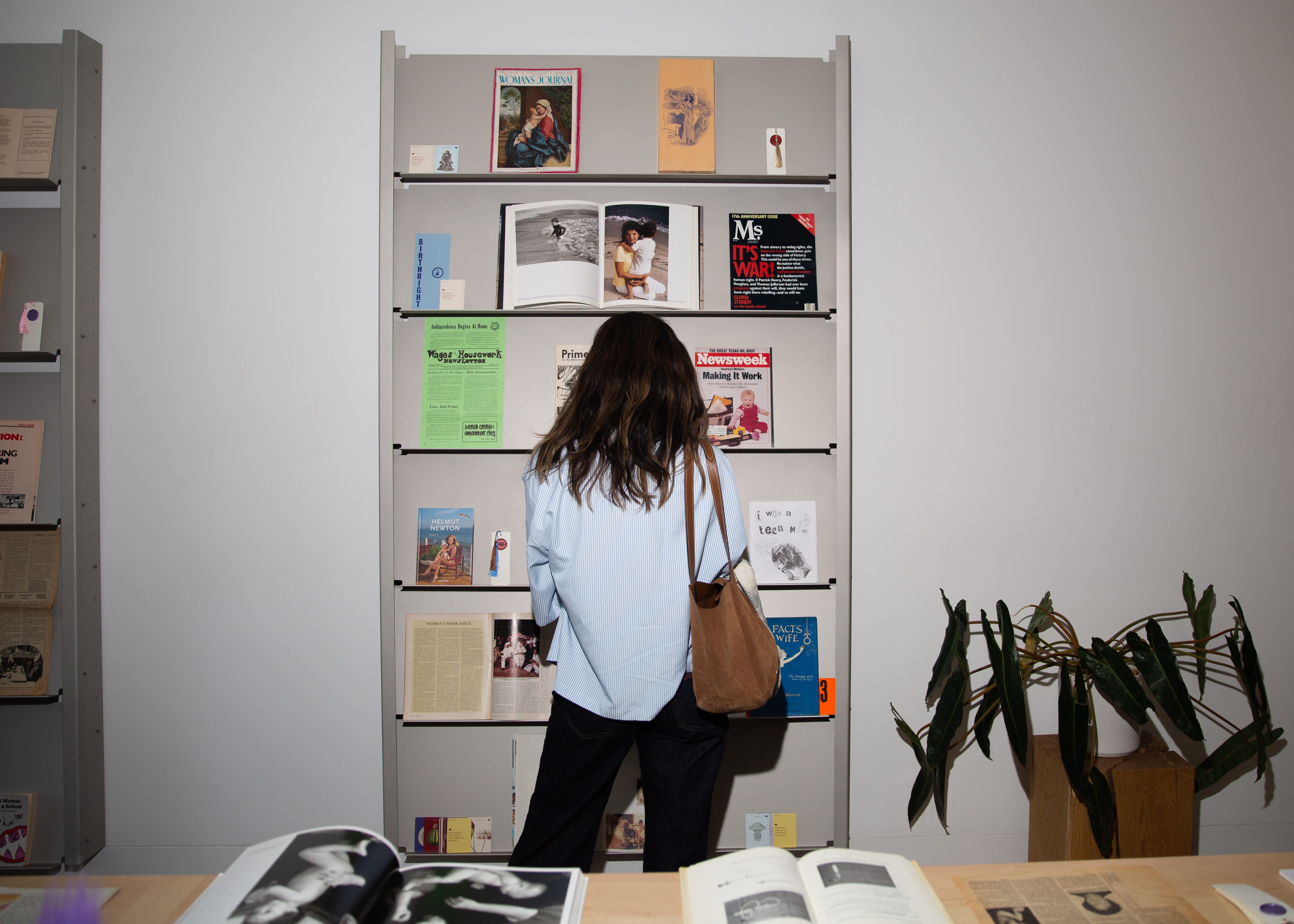
dream vision, dream exhibit, dream team
"it's striking how rarely motherhood is archived, studied, or exhibited with an appropriate level of care" -this sentence is going to rearrange something in my brain permanently. i spent my career in knowledge management and information architecture, literally building systems to preserve and organize what matters, and the fact that motherhood as a category of human experience is so underrepresented in archives and institutions is both obvious once you name it and shocking that it's still true. the objects in this archive are the material record of something our culture treats as simultaneously sacred and invisible. this project matters!!